Losing consistency doesn’t mean you failed. It means you’re human. Almost every habit you’ve ever built—whether it’s working out, reading, journaling, or focusing better—will break at some point. Travel, stress, burnout, illness, or just a rough week can throw everything off. The real problem isn’t losing a habit. The real problem is not knowing how …
If you’ve ever tried building a habit, you’ve probably heard the famous “21 days” rule. It sounds clean, simple, and motivating. But in real life, it’s also misleading. The reality is this: habits don’t follow a fixed timeline. Some habits feel automatic in a couple of weeks. Others take months. And some never fully “lock …
Most people don’t fail because they lack discipline. They fail because they’re trying to build habits the wrong way. At the start, everything feels easy. You’re motivated. You set clear goals. You imagine how consistent you’ll be. But after a few days—or at best a couple of weeks—things start to slip. You miss one day. …
Building habits sounds easy in theory. You decide what you want to change, you feel motivated, and you start strong. But after a few days—or at best a couple of weeks—the consistency fades. Life gets busy, motivation drops, and the habit slowly disappears. This isn’t because you lack discipline. It’s because most habits fail due …
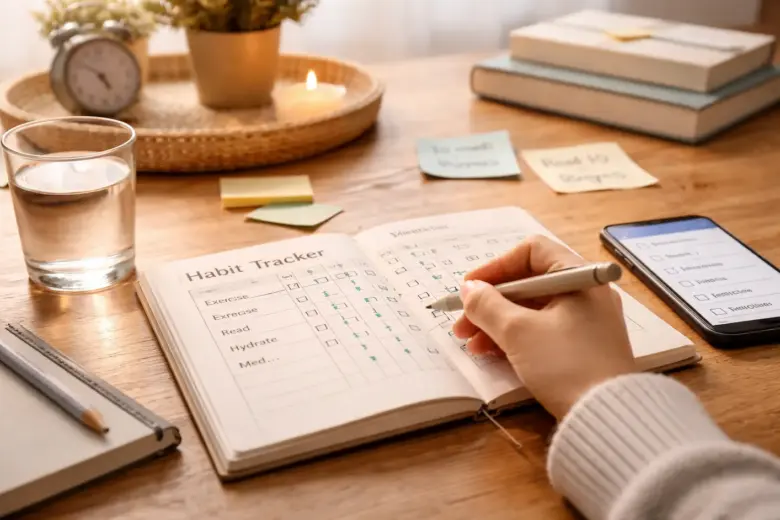
There was a time when I tried to change everything about my routine at once—waking up early, exercising daily, eating clean, reading more, and staying productive all day. For a few days, it felt exciting. Then reality hit. I felt exhausted and overwhelmed and eventually gave up on everything. That experience taught me something important: …
In 2024, my average screen time was about seven hours a day. At the time, it didn’t seem like a problem. My phone was always nearby—during work, meals, breaks, and even before bed. Checking it constantly felt normal. By 2026, however, I started noticing something strange. I would unlock my phone without even thinking about …
Digital clutter builds up faster than most people realize. It starts small—one extra file on your desktop, a few unused apps on your phone, a handful of random screenshots you plan to organize “later.” But over time, these small things pile up. Before you know it, your devices feel messy, slow, and difficult to navigate. …
For a long time, I was what I call a “serial course-taker.” My bookmarks were full of expensive masterclasses, online courses, and long tutorials that I started with excitement but never finished. Every time I opened my laptop to continue learning, the task felt overwhelming. Most courses required hours of uninterrupted focus, and in reality, …
I used to be a “notification junkie.” In 2024, my average response time to an email was under 90 seconds. I took pride in my speed, thinking “responsiveness” was synonymous with “productivity.” But by the end of that year, I was burnt out, my deep-work capacity had vanished, and I felt like I was spending …
Most mornings used to begin the same way for me. The alarm would go off, and before my eyes were fully open, my hand would already be reaching for my phone. Within minutes, I was checking emails, scanning news headlines, and scrolling through social media. By the time I actually got out of bed, my …